Few things frustrate advertisers more than seeing a Facebook ad account restricted just when campaigns start moving.
For new advertisers, it feels unfair. For experienced teams, it often feels repetitive.
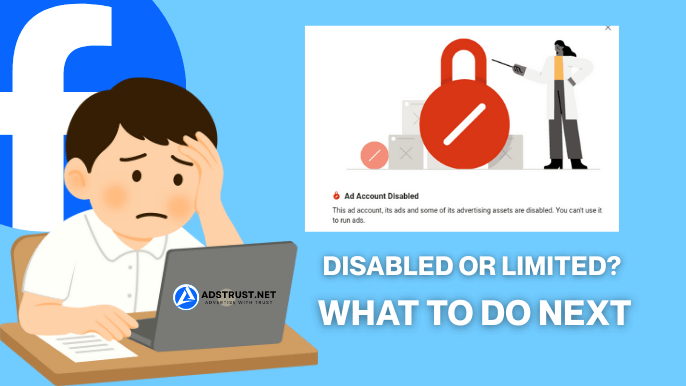
The same pattern keeps appearing: campaigns launch, spend begins, momentum builds, and then the account is suddenly limited, reviewed, or disabled.
The problem is that most people still look at restrictions as isolated events.
In reality, Facebook ad accounts restrictions usually reflect a larger issue inside the advertising system.
Why Facebook Ad Accounts Restricts in the First Place
Facebook does not evaluate ad accounts based only on ad policy.
It looks at the full operating environment around the account.
That includes payment behavior, Business Manager Facebook trust, fanpage history, profile consistency, and the speed at which spending increases.
If those signals do not align, the platform becomes conservative very quickly.
A restriction is often less about a single violation and more about a lack of structural trust.
Why New Facebook Ad Accounts Get Hit First?
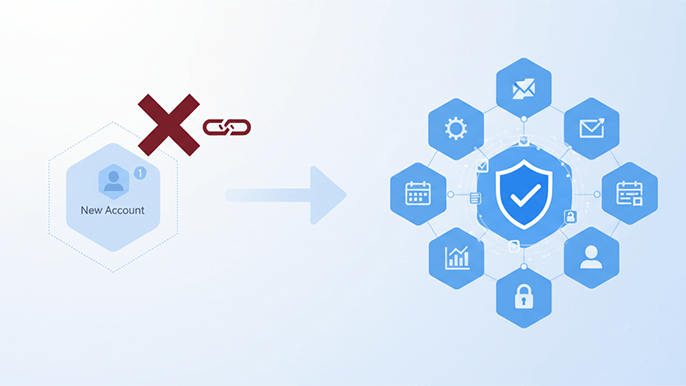
New Facebook ad accounts carry very little historical trust.
They have no stable billing record, limited behavioral history, and no long-term signal that tells Facebook the advertiser can scale responsibly.
That is why new accounts are usually the first to face daily spending limits, manual reviews, or sudden restrictions.
Many advertisers misread this as bad luck. It is usually just the system doing what it was designed to do.
Why Good Campaign Performance Does Not Always Protect an Account
This is one of the biggest misunderstandings in Facebook advertising.
A campaign can perform well and still get restricted.
Conversion results do not automatically translate into trust.
Facebook separates commercial performance from infrastructure confidence.
An account may produce sales while still looking unstable from a risk perspective.
That is why some advertisers keep asking why profitable campaigns still get interrupted.
The answer often sits outside the campaign itself.
How Business Managers Influence Facebook Ad Account Restrictions
Facebook Ad accounts do not live independently.
They sit inside Business Managers, and that structure affects how much trust Facebook assigns to the account.
A weak or immature BM can slow down account growth or make restrictions more likely even when the ads themselves are acceptable.
A broader explanation of how Business Managers fit into the system is available here:
Facebook Business Manager (BM): Complete Guide to Types, Limits & Safe Usage
Why Fanpages and Profiles Also Matter
The fanpage delivering the ads and the profiles managing access both influence the account environment.
A page with weak history, unstable ownership, or inconsistent activity increases friction.
The same applies to profiles that look mismatched, recently changed, or regionally inconsistent.
Advertisers often focus on the ad account while ignoring these surrounding layers.
In practice, Facebook evaluates them together.
For a deeper look at how fanpages influence ad stability, see:
Buy Facebook Fanpage Explained: New vs Aged vs Verified Pages
Why Restrictions Often Repeat After Appeals
Appeals can restore access, but they rarely solve the underlying problem.
If the account returns to the same unstable structure, restrictions often appear again.
This is why some advertisers feel trapped in a cycle of review, reinstatement, and disruption.
The account comes back, but the system around it stays weak.
The result is temporary recovery instead of long-term stability.
When Controlled Shared Facebook Ad Accounts Make More Sense
For advertisers who are still testing, warming assets, or rebuilding after restrictions, controlled environments often reduce unnecessary friction.
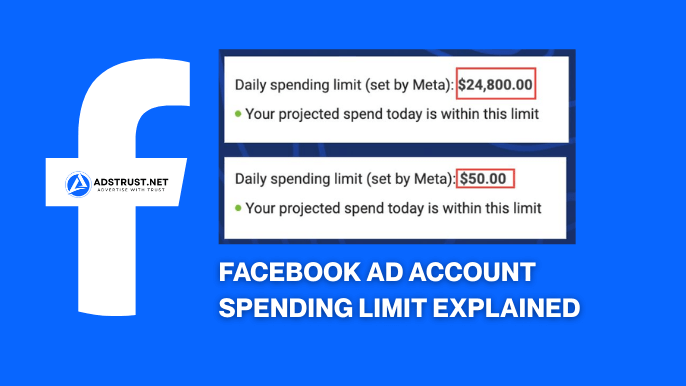
Shared ad accounts with defined spending limits allow campaigns to run inside more structured systems without forcing all trust-building to happen from zero.
This is one reason many advertisers gradually move into managed environments rather than repeatedly creating fragile new accounts.
A breakdown of controlled ad account structures can be found here: Facebook Ad Account Spending Limit Explained (How It Works)
What Restrictions Usually Reveal
Most restrictions reveal one of three realities.
The first is that the account scaled before the structure matured.
The second is that the surrounding assets were inconsistent.
The third is that the advertiser tried to solve a systems problem with campaign-level adjustments.
Until those patterns are understood, restrictions keep repeating under different names.
Final Thoughts
Restrictions on advertising accounts on Facebook these days are rarely random.
They usually reflect the platform’s attempt to control risk inside an environment that has not earned enough trust yet.
Advertisers who stop treating ad accounts as isolated tools.
And start treating them as parts of a wider system — usually experience fewer interruptions over time.
Understanding the reason behind restrictions does not eliminate them overnight.
But it changes the decisions that lead to them.