Why Facebook Business Manager Is No Longer “One Size Fits All” ?
Facebook Business Manager has changed dramatically over the years.
What used to be a single management tool has evolved into a layered advertising infrastructure.
Where different Business Managers serve different purposes based on trust level, spending behavior, and long-term intent.
Many advertisers struggle not because Facebook Ads do not work, but because they start with the wrong Business Manager.
This guide explains Facebook Business Manager as a system, not a product — helping you choose the right BM for your current stage, and avoid costly mistakes later.
What Is Facebook Business Manager?
Facebook Business Manager (BM) is the core entity Meta uses to evaluate how businesses operate on its advertising platform.
It is not just a dashboard.
Meta assigns trust, limitations, and permissions at the Business Manager level, based on factors such as:
- account behavior
- payment history
- business verification status
- long-term usage patterns
This is why two advertisers running similar ads can experience very different outcomes.
Business Managers do not operate in isolation.
They are designed to organize and control assets such as Facebook fanpages and ad accounts.
Choosing the right fanpage type directly affects how a Business Manager performs over time.
Facebook Fanpage Explained: New vs Aged vs Verified Pages
Profiles used to access Business Managers also influence security and account health.
Facebook Profile Accounts Explained : Global Guide for Ads & Growth
How Meta Evaluates Business Managers in 2026
In 2026, Meta treats Business Managers as long-term entities, not temporary tools.
New BMs start with low trust and tight limits. Trust increases gradually through:
- consistent ad activity
- successful payments
- stable behavior over time
Understanding this evaluation model is critical before choosing any BM type.
The Facebook Business Manager Lifecycle
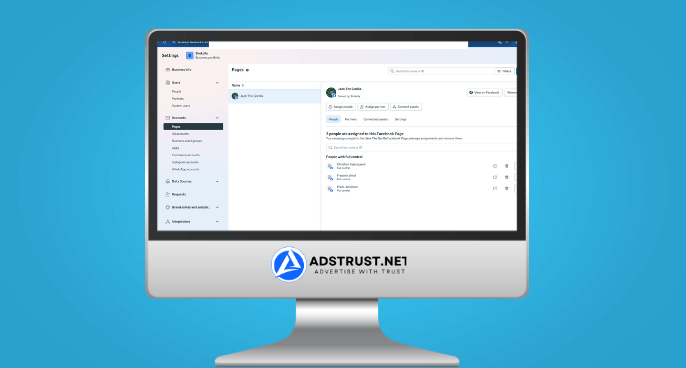
From Testing to Enterprise Operations
Not all Business Managers are designed for the same purpose.
Below is a practical lifecycle model showing how different BM types fit into different advertising stages.
Stage 1: Testing & Learning (Low-Risk Entry)
At the beginning, advertisers should focus on learning how Facebook Ads behave without exposing valuable assets.
A single-account environment is usually enough at this stage.
Many advertisers start with BM1 Facebook Business Manager, which provides one ad account and limited spending capacity for controlled testing.

Some also choose BM350 Facebook Business Manager, allowing Meta to gradually increase trust as payment history develops.
Stage 2: Warm-Up and First Scaling
Once campaigns show stable signals, advertisers often need more structure — but not full-scale infrastructure yet.
At this stage, BM5 Facebook Business Manager allows advertisers to distribute spend across multiple ad accounts while maintaining discipline and risk control.

This phase focuses on warming up accounts properly, not aggressive scaling.
Stage 3: Structured Scaling
As advertising operations expand, segmentation becomes essential.
Advertisers managing multiple campaigns, offers, or markets often transition into BM10 Facebook Business Manager or BM50 Facebook Business Manager.
These structures support parallel execution while preserving long-term account health.
Stage 4: Trust-First Infrastructure
Some advertisers prioritize stability and compliance over immediate capacity.
In these cases, starting with a Verified Facebook Business Manager allows businesses to build ad accounts manually on top of an already trusted entity.
This approach is common for brands and agencies planning long-term advertising operations.
Stage 5: Enterprise-Level Operations
At the highest level, agencies and large companies require massive capacity, priority trust, and predictable escalation paths.
This is where BM2500 Facebook Business Manager fits.

BM2500 is enterprise infrastructure — limited in availability and designed for organizations operating at serious scale.
Why Choosing the Wrong Business Manager Can Hurt Long-Term Performance
Using a Business Manager that does not match your advertising stage often creates unnecessary friction.
Entry-level advertisers using enterprise infrastructure may waste resources.
Scaling businesses using limited BMs often hit structural ceilings too early.
The goal is not to buy the biggest BM — it is to build an infrastructure that grows naturally with your business.
How AdsTrust Approaches Business Manager Infrastructure
AdsTrust does not sell a single “universal” Business Manager.
Each BM offered is positioned for a specific stage, with clear limits and use cases.
This approach helps advertisers:
- reduce risk
- avoid unnecessary upgrades
- build sustainable systems
The focus is always on long-term performance, not short-term volume.
Choosing the Right BM Facebook for Your Stage
Facebook Business Manager is no longer a simple setup decision.
It is an infrastructure choice that directly affects performance, stability, and scalability.
If you understand where you are in the lifecycle above, choosing the right BM becomes straightforward — and costly mistakes become avoidable.
If you are unsure which Facebook Business Manager fits your current stage, start by identifying where you are in the lifecycle above and choose the BM designed specifically for that phase.