A lot of advertisers assume serious scale should begin only after business verification.
That sounds reasonable on the surface, but it is not always true.
Some businesses do need a verified Business Manager before they scale.
Others think verification is the missing piece when the real problem is weaker infrastructure, poor asset control, or unrealistic pacing.
That is why this question matters. If you solve the wrong problem, scaling usually becomes harder, not cleaner.
For the broader BM foundation, it still helps to start with the main guide to Facebook Business Manager and the supporting article on Facebook Business Manager Explained.
This article focuses on a narrower decision: do you need a verified BM before you scale, or are you trying to use verification as a substitute for better operational structure?
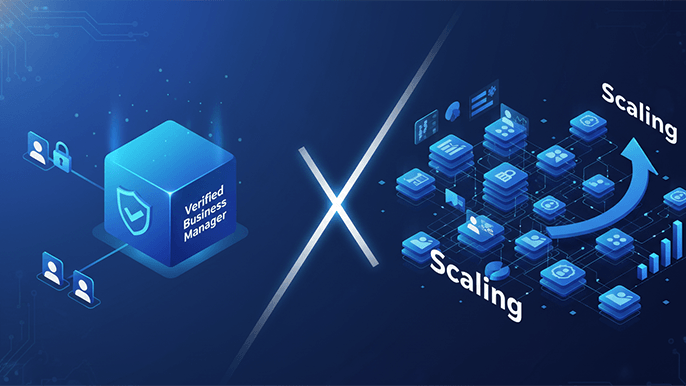
Verified Business Manager and scaling are not the same decision
This is where many advertisers get confused.
Verification is about business identity. Scaling is about operational readiness.
Those two things can support each other, but they are not the same layer of the system.
A business can be verified and still scale badly.
A business can also have the urge to scale before its structure is stable enough to support that growth.
That is why verification should not be treated like a magic gate that instantly makes everything safer.
AdsTrust’s own positioning around verified Facebook Business Manager reflects this clearly.
The product is described as a verified BM itself, not as a finished advertising machine that automatically carries mature ad account history or instant scaling privileges.
The buyer still needs to build on that verified foundation properly.
What business manager Facebook verification really changes
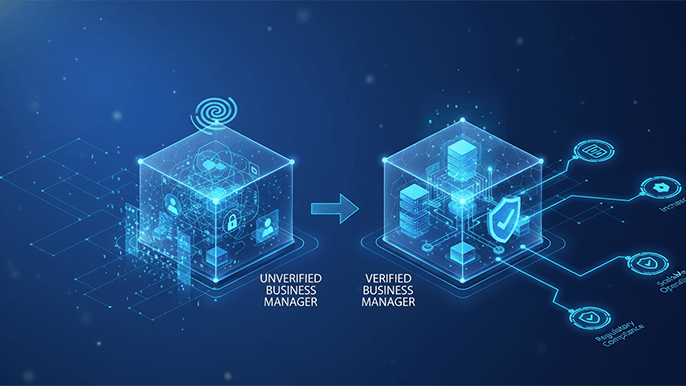
Verification can strengthen the credibility of the BM at the business level, but it does not replace disciplined operations.
What changes after verification is not that Meta stops watching.
What changes is that the business has attached a clearer identity layer to the structure.
That can matter for trust and long-term infrastructure quality, especially for businesses that want a more formal foundation.
But a verified BM is still judged by behavior.
If permissions are messy, assets are attached without logic, spending is forced too quickly, or the whole BM behaves like a rushed setup, verification will not rescue it.
This is exactly why the earlier article on why Facebook restricts Business Managers after verification matters here.
Verification can help, but it does not erase poor operating patterns.
Why some advertisers chase verification too early
A lot of businesses look for verification when what they really want is reassurance.
They want a stronger signal, more confidence, and a feeling that the BM is now “real enough” to scale.
The problem is that emotional certainty and operational readiness are not the same thing.
Sometimes the business is still too early in its structure.
Sometimes the team is still learning how to manage permissions, assets, and campaign separation properly.
Sometimes the BM itself is not being used cleanly enough yet.
In those cases, verification can become a distraction.
The advertiser thinks the next step is to formalize the BM, when the real next step is to make the BM more stable.
The stage where verification starts making more sense
A verified BM becomes more relevant when the business is no longer just testing ideas and is starting to care more about long-term continuity.
That usually means the operation has become more deliberate.
The business may already have a clearer structure, a more serious plan for Meta as a growth channel, and a stronger need for owned infrastructure rather than temporary access or fragmented setups.
At that point, verification stops being a symbolic goal and starts becoming a structural one.
This is why the question is not simply “Should I verify?”
The more useful question is whether the business has reached the stage where a stronger foundation will actually be used well.
Cases where scaling can happen before verification
Not every business needs to wait for verification before it begins to grow.
If the setup is still relatively early, the team is still building process discipline, and the goal is measured progress rather than aggressive expansion, the more important priority may be clean structure rather than formal verification.
A business in that phase may benefit more from choosing the right BM stage, such as BM5 or BM10, and operating them correctly.
The key point is that growth and verification do not always have to happen in the order people imagine.
Some businesses should verify before scaling harder. Others should first prove that they can run a clean system.
Cases where a verified BM becomes the smarter move
There are also many situations where a verified BM before scaling is the more sensible path.
This is especially true when the business wants stronger ownership, cleaner long-term asset continuity, and a more formal business-level foundation for Meta operations.
It can also matter when the company is moving beyond fragmented or temporary setups and wants a structure that better matches serious brand or agency use.
That does not mean verification guarantees safety.
It means the business is now mature enough to benefit from what verification actually offers.
For some operators, this becomes more important than simply increasing BM size.
A business may think it needs to jump from BM50 to BM2500, when the real need is not enterprise capacity yet, but a cleaner, verified owned foundation.
The real risk of scaling without the right base
Scaling on top of weak structure usually creates more noise than growth.
When the BM foundation is unclear, the business tends to feel that weakness more sharply as activity increases.
Access mistakes become more expensive. Asset grouping gets less logical. Internal separation becomes harder to manage.
Scaling pressure exposes weaknesses that were easier to ignore at a smaller stage.
That is why the question of verification should always be tied to architecture.
If the base is weak, more scale rarely fixes it.
It usually magnifies it.
The opposite mistake: using verification as a shortcut
The opposite problem is just as common.
Some advertisers act as though verification itself is the missing ingredient.
They assume that once the BM is verified, serious growth can begin safely and the system will behave differently by default.
That is usually where disappointment starts.
A verified BM still needs warm-up, controlled usage, clean admin logic, and realistic pacing.
The earlier roadmap article on how to warm up a verified Business Manager safely matters for exactly this reason.
Verification can improve the foundation, but the business still has to operate in a way Meta can trust over time.
How to tell what your business actually needs next
The simplest way to answer this question is to ignore status language and look at the current shape of the business.
Is the real problem lack of verification, or lack of structure?
Does the business already operate with enough discipline to benefit from a verified BM?
Is the team trying to build long-term owned infrastructure, or simply looking for a confidence signal?
Would verification solve a real operating problem, or just make the setup look more official?
Those questions are usually more useful than asking whether verification sounds more advanced.
Where the best decision usually comes from
The best decision usually comes from honesty about stage.
A business that is still early should not force itself into verification just because it wants to feel more established.
A business that is already serious, structured, and thinking long-term should also not pretend that a temporary or underbuilt foundation will be enough forever.
The right answer sits in the middle.
Verification matters most when the business is ready to turn a working advertising setup into a more durable operating system.
Final Thoughts
So, do you need a verified BM before you scale?
Sometimes yes. Sometimes no.
If the business is moving toward long-term owned infrastructure, stronger continuity, and a more formal Meta operating base, a verified BM can be the right next step.
If the business still has unresolved structure problems, then verification may be the wrong answer to the wrong question.
The safest path is not to chase verification blindly or to dismiss it casually.
It is to make sure the foundation matches the stage of the business.
That is usually what keeps scaling from turning into instability.