
A lot of advertisers think payment is the simple part of running a Facebook ad account.
They focus on creatives, campaigns, and performance, while treating billing as something mechanical in the background.
In practice, that is a mistake. Inside the Meta advertising system, payment behavior is not just an administrative detail.
It is part of how Facebook ad account trust is evaluated over time.
An account can look active on the surface and still send weak signals through unstable billing patterns, awkward payment rhythm, or behavior that makes the whole environment look less reliable.
If you already understand the basics of ad account structure, this article explains how Facebook reviews payment behavior in ad accounts
Why that matters more than many advertisers expect, and what weak billing patterns often reveal about the wider system.
For broader context, it helps to read How Facebook Evaluates Ad Account Trust and Why Some Facebook Ad Accounts Stay Limited for Too Long.
Payment behavior is part of trust, not just accounting

One of the biggest misunderstandings in Facebook advertising is the belief that billing belongs to finance while trust belongs to the ad account.
Meta does not separate those things so neatly.
From Meta’s perspective, the way an advertiser pays is part of the way the advertiser behaves.
A Facebook ad account that shows stable, believable payment behavior often looks more mature than one with irregular billing patterns, repeated interruptions, or signs of poor operational control.
That does not mean every payment issue creates immediate damage. It means billing behavior contributes to the overall trust picture.
This is why Facebook ad account payment behavior matters even when campaign performance looks acceptable.
Meta watches consistency more than isolated events

A single billing event is rarely the whole story. What matters more is the pattern.
A Facebook ad account can survive the occasional interruption or inconsistency, especially if the wider account behavior still looks stable.
But when payment rhythm repeatedly feels awkward, uncertain, or poorly controlled, Meta has more reason to interpret the advertiser as higher risk.
Consistency matters because it signals operational maturity.
An account that pays in a steady, believable way usually looks more serious than one that feels stop-start, improvised, or fragile at the billing level.
That is often why advertisers become confused. They focus on individual incidents, while Meta is reading the pattern.
Weak billing patterns can slow Facebook ad account trust growth
Not every weak signal produces a dramatic restriction.Some simply hold the account back.
A Facebook ad account may keep running, but trust growth slows down.
Spending flexibility stays low. Limits improve very slowly. The account never seems to reach the stage the advertiser expects.
In many cases, weak payment behavior is part of that picture.
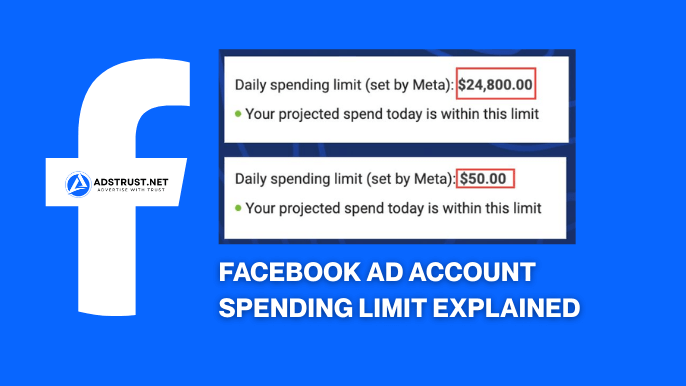
This connects directly with Facebook Ad Account Spending Limit Explained and How to Increase Facebook Ad Account Spending Limit.
The problem is often not that Meta refuses growth for no reason. The problem is that the account’s payment behavior is not helping the case for stronger trust.
Stable spending and stable billing usually reinforce each other
Spending behavior and payment behavior are closely linked.
A Facebook ad account that scales in a controlled, believable way often produces cleaner billing patterns as well.
On the other hand, an account that moves erratically in spend may also create payment behavior that looks unstable.
That does not mean every fast-growing account is weak. It means growth without rhythm often creates pressure at the billing layer too.
This is why advertisers should not think about payments separately from account maturity.
A healthier Meta ad account usually shows alignment between how it spends and how it pays.
Payment behavior can expose deeper operational weakness
Sometimes weak billing is not the core problem. It is the symptom.
A business with messy internal processes often shows that mess through payments. Cards change too often.
Billing rhythm feels improvised. Operational responsibility is unclear.
The account may still run campaigns, but Meta is not only seeing media buying.
It is seeing a business environment that may not look fully controlled.
That is why payment behavior often reveals more than advertisers intend.
It can expose whether the Facebook ad account is being run inside a calm, organized structure or inside a system that still feels unstable.
The wider Meta environment still matters
A Facebook ad account does not send billing signals alone. The wider environment matters too.
A weak Business Manager, a fragile Facebook fanpage, or a poorly structured account role can make payment issues feel more significant than they otherwise would.
Meta reads assets in context, not in complete isolation.
This is why Can a Strong Business Manager Fix a Weak Facebook Ad Account?
And How Facebook Fanpages Affect Ad Account Stability are relevant here.
Better infrastructure does not erase poor billing behavior, but a stronger environment can make the overall system look more coherent.
Weak billing inside a weak environment is usually harder to absorb than weak billing inside a cleaner one.
Shared accounts and owned accounts do not always carry the same payment logic
This is another reason advertisers get confused.
A shared Facebook ad account and an owned Facebook ad account can play different roles inside the Meta advertising system.
Their control model, operational boundaries, and trust path are not always the same.
That affects how payment behavior should be interpreted.
This is exactly why Shared Ad Accounts vs Owned Ad Accounts matters in this cluster.
The advertiser may expect one kind of growth path, while the account is actually operating under a different structural logic.
If the role of the account is misunderstood, payment behavior is often misunderstood too.
Testing accounts usually produce different billing signals from scaling accounts
A testing account and a scaling account are not supposed to look the same.
A testing-oriented Facebook ad account may naturally have lighter, more cautious activity.
A scaling account is expected to show stronger continuity and a more believable operating rhythm.
Problems begin when advertisers expect scaling-level trust from an account that still behaves like a testing asset.
This is why The Real Difference Between Testing Accounts and Scaling Accounts matters here.
Payment behavior is part of that difference. Meta is not only seeing whether the account can pay. It is seeing what kind of account it appears to be.
Strong payment behavior does not guarantee safety
It is important not to oversimplify the other way. Good billing patterns help, but they do not guarantee a stable Facebook ad account by themselves.
Weak creatives, poor page quality, weak asset pairing, or fragile infrastructure can still create problems.
Payment behavior is one layer of trust, not the whole system. That is why serious advertisers do not treat payments as a magic solution.
They treat them as one important signal inside a wider trust model. A strong billing pattern supports a healthier system. It does not replace one.
What Meta is likely looking for in payment behavior
Meta is usually trying to decide whether the advertiser looks believable over time.
That means the billing layer should feel controlled, consistent, and aligned with the stage of the account.
Payment behavior that looks abrupt, uncertain, or improvised often works against that.
Payment behavior that looks calm and sustainable usually supports trust better.
The deeper point is not about one “perfect” payment style.
It is about whether the account behaves like a real operating system rather than a fragile setup trying to push beyond its maturity.
What advertisers should pay attention to
The most useful way to think about Facebook ad account payment behavior is not to obsess over isolated transactions.
It is to watch the story the billing layer tells. Does the account look stable? Does spend rhythm make sense?
Does the payment pattern reinforce maturity or expose confusion?
Does the wider Meta infrastructure support the kind of account behavior you are expecting?
These are usually better questions than simply asking whether a payment technically went through.
Final Thoughts
So, how does Facebook review payment behavior in ad accounts?
Usually as part of a wider trust pattern. Meta is not only evaluating whether the advertiser can pay.
It is evaluating whether the billing behavior looks stable, believable, and aligned with the maturity of the Facebook ad account and the wider system around it.
When payment behavior looks weak, trust growth often slows. When it looks stronger, the environment usually becomes easier to trust.
That is why billing should never be treated as background noise. In a Meta advertising system, payment behavior is part of the account’s identity.
Need stable, verified ad accounts? Browse our Facebook ad accounts ($50 to No-Limit), tested before delivery with a replacement warranty.