
TL;DR: Aged Facebook fanpages generally get smoother ad delivery and fewer checkpoints because they carry a longer history for Meta to evaluate, while new fanpages face more friction until they build activity. Verified fanpages sit above both, adding identity confirmation for long-term trust.
Pick based on how fast you need to scale and how much setup work you can absorb, not age alone.
What Is the Real Difference Between Aged, New, and Verified Facebook Fanpages?
An aged Facebook fanpage is one that has existed for an extended period, usually with some posting history and follower activity, while a new fanpage was created recently with little to no track record.
A verified fanpage has completed Meta’s identity confirmation process, which adds a badge and an extra layer of accountability on top of whatever age it already has.
These are three separate variables, age, activity, and verification status, and they interact rather than substitute for each other.
A page can be old and completely dormant, or brand new and verified, so the labels only tell part of the story.
For a full breakdown of how these categories are structured on the AdsTrust catalog, this fanpage explainer covers the baseline definitions in more depth.
How Does Meta’s Trust Evaluation Treat Aged Facebook Fanpage Differently?

Meta’s systems appear to weigh historical signals, such as consistent posting, engagement patterns, and prior ad activity, when deciding how much scrutiny a page or connected account receives.
This conclusion is based on the experience of the AdsTrust team and many of AdsTrust’s customers.
A page with years of normal activity gives the platform more reference points to judge whether new behavior looks consistent or anomalous.
A brand new page has no such baseline, so early actions, like launching ads immediately, can read as higher risk simply because there is nothing to compare them against.
This is not a guarantee of safety, per Meta’s advertising standards, all advertisers are subject to ongoing review regardless of account age.
But in practical terms, aged pages with real history tend to move through automated checks with less friction than accounts starting from zero.
Aged vs New Facebook Fanpage: How Do Spending Limits and Delivery Speed Compare?
Aged Facebook fanpages connected to accounts with spending history often see higher initial trust signals, which can translate into steadier delivery once campaigns launch.
New fanpages, by contrast, are frequently placed under closer initial limits while the system gathers data on how the account behaves.
This isn’t a fixed rule Meta publishes, it’s a pattern our team has observed across many account setups over the years.
| Factor | New Fanpage | Aged Fanpage | Verified Fanpage |
| Trust baseline | None yet | Built over time | Confirmed identity + history |
| Identity checkpoints | More likely early on | Fewer, if history is clean | Already passed |
| Typical setup speed | Requires warm-up period | Often ready faster | Ready, plus badge trust |
| Best fit | Testing, low budget, patience to warm up | Scaling with existing creative | Long-term brand or agency use |
Read this alongside how spending limits actually work since the fanpage and the ad account interact closely in how Meta scores the overall setup.
Why Do New Accounts Trigger More Identity Verification Checkpoints?
New accounts and pages often lack the accumulated signals that let Meta’s systems classify them with confidence, so they get flagged for additional identity checks more frequently.
This can mean requests for ID confirmation, phone verification, or temporary holds on ad delivery while the review completes.
Aged pages with a clean history typically skip a portion of this friction since much of the identity picture is already established.
That said, this is never guaranteed, per Meta’s Business Help Center, any account can be asked to verify identity at any time regardless of history.
Does Account Age Matter More Than Account History?
Account history matters more than calendar age alone, because a page that sat untouched for years can look no different to Meta than a brand new one.
Dormancy resets the practical value of age; three years of silence does not carry the same weight as three years of steady, normal activity.
This is one of the most overlooked points in fanpage buying guides, and it’s why AdsTrust frames aged assets by activity quality, not just a birthdate.
- A page active weekly for two years typically outperforms a page untouched for five years
- Spend history on connected ad accounts adds more signal than fanpage age by itself
- Ownership transfers can reset some trust signals, which is why post-purchase warm-up still matters
- Engagement quality (real comments, shares) counts more than raw follower totals
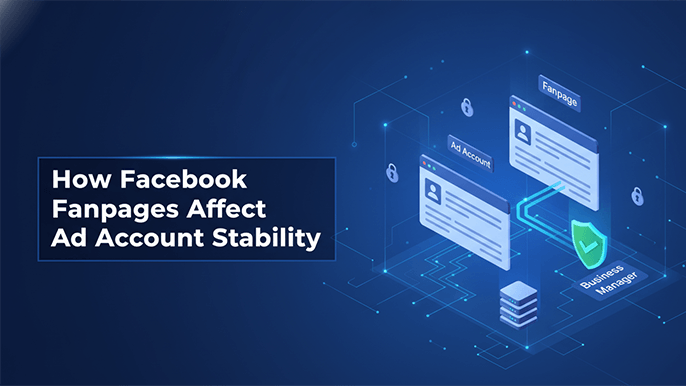
This nuance connects directly to how fanpages affect ad account stability, since the page’s own activity pattern feeds into how the linked ad account is judged.
What Role Do Verified Facebook Fanpages Play as a Third Tier?
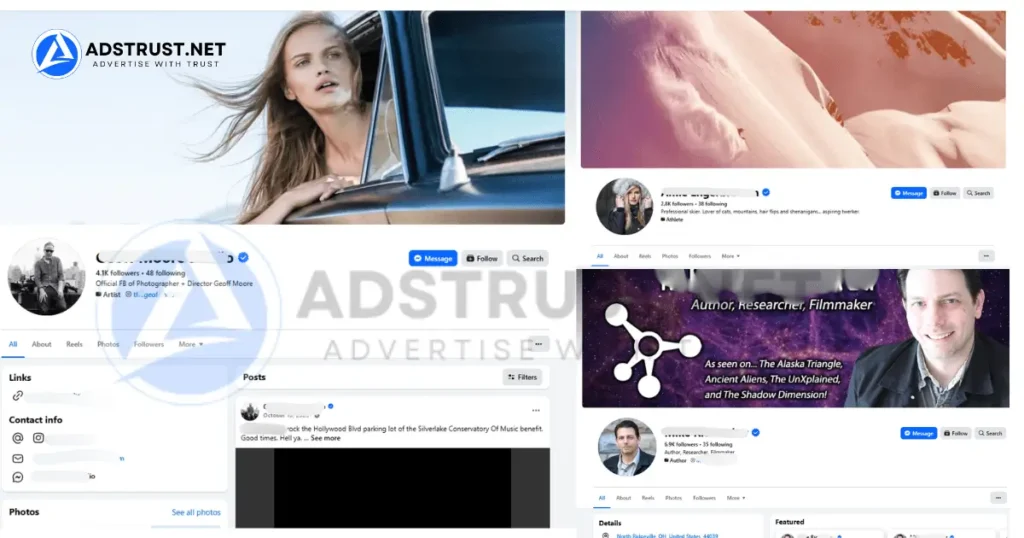
A verified fanpage adds a confirmed identity layer on top of whatever trust the page already carries from its age and activity.
For operators who have already scaled on aged pages and want an extra layer of stability for long-term brand presence, verified is the natural next step.
It is not a shortcut that replaces good account hygiene, but it does reduce one category of friction tied to identity confusion.
AdsTrust’s verified fanpage option is built for advertisers who want that additional confirmation layer rather than starting cold.
How Does Business Manager Infrastructure Support Aged Pages?
An aged fanpage performs best when it sits inside a properly structured Business Manager, since the BM itself carries its own trust signals separate from the page.
Pairing an aged page with a thin or brand-new BM can undercut some of the trust the page brings on its own.
For agencies running multiple pages and clients, infrastructure like BM10 or BM50 gives room to organize aged pages without overcrowding a single Business Manager.
Understanding how BM controls ad accounts helps clarify why the pairing of aged page plus stable BM outperforms either asset alone.
Are Aged Pages Risk-Free? What Compliance Still Matters
Aged fanpages are not invulnerable, they still require compliant setup and usage to hold their trust standing over time.
Common risk factors include mismatched login geolocation, sudden changes in posting behavior, or connecting the page to an ad account with a history of policy violations.
Under AdsTrust’s warranty terms, Facebook profile accounts carry a 24-hour warranty window for login and access issues, but ongoing compliance with Meta’s policies remains the buyer’s responsibility once access is confirmed.
Regional matching also matters more than most buyers expect; logging into a page tied to one country from a completely different IP location can undo some of the trust an aged asset would otherwise provide.
How Do Aged Accounts Affect Cost-Per-Click and Auction Position?
Accounts and pages with clean spend history often see more favorable auction outcomes, since Meta’s delivery system factors in historical account quality alongside bid and relevance signals.
This can show up as lower cost-per-click or more consistent delivery pacing compared to a fresh account still being evaluated.
It is not a fixed discount, results vary by vertical, creative, and audience, but the pattern is common enough that many agencies build aged assets into their scaling plans deliberately.
When Does Buying Aged Beat Warming Up a New Facebook Page?
Buying an aged page tends to make sense when a campaign needs to launch quickly and the cost of weeks of warm-up delay outweighs the setup cost of an aged asset.
Warming a new page from scratch typically takes real time and consistent low-risk activity before it can handle serious ad spend without added scrutiny.
If your timeline allows for that runway and you’re testing something small, a new page from AdsTrust’s new fanpage catalog can be the more economical choice.
But for agencies managing client budgets on tight launch windows, the time saved by starting on an aged page often justifies the setup, especially when paired with the guidance in testing vs scaling accounts.
What Setup Protocol Should You Follow After Buying an Aged Fanpage?
A careful setup protocol after purchase reduces the chance of triggering an immediate flag on a newly acquired aged page.
- Log in promptly within the warranty window to confirm access and credentials work as described
- Match your login location to the page’s stated region where possible before heavy activity begins
- Avoid drastic changes to page name, category, or admin structure in the first few days
- Introduce ad spend gradually rather than launching at full budget on day one
- Keep creative and offers consistent with the page’s existing niche when one exists
This mirrors the same logic covered in how to warm up a new Business Manager properly, since a page transfer benefits from the same gradual, consistent approach.
Skipping the warm-up guesswork is exactly why AdsTrust exists: browse verified and aged Facebook Fanpages built for advertising, with clear tiers so you buy the trust level your campaign actually needs.
FAQ: Aged vs New vs Verified Facebook Fanpages
Can I use a new fanpage for ads instead of buying aged?
Yes, a new fanpage can run ads, but it typically needs a gradual warm-up period and careful early activity before it can reliably handle larger budgets without added scrutiny.
How long does it take to warm up a new Facebook ad account?
There is no fixed timeline Meta publishes, and in our team’s experience it varies by account and activity pattern, but most operators plan for several weeks of consistent, low-risk usage before scaling spend meaningfully.
What’s the difference between aged and verified Facebook fanpages?
An aged fanpage has existed and been active for an extended period, while a verified fanpage has completed Meta’s identity confirmation process, which can be layered on top of an aged page for added trust.
Do aged Facebook pages still work in 2025/2026?
Aged pages remain a viable option for advertisers, since account history still factors into how Meta’s systems evaluate risk, though no asset type is exempt from ongoing policy review.
Why do new Facebook ad accounts get disabled so quickly?
New accounts lack a history for Meta to reference, so early behavior that looks aggressive, like sudden high spend or rapid changes, can trigger review faster than it would on an established account.
Is it safe to buy aged Facebook accounts and fanpages?
Buying from a provider with clear warranty terms, like AdsTrust’s stated login and access warranty, reduces some risk, but long-term standing still depends on how you use the asset and Meta’s own policies over time.
What should I look for when buying an aged fanpage for advertising?
Look for genuine activity history rather than just age, region matching to your intended audience, a clear warranty on login access, and confirmation the page hasn’t carried prior policy violations.
How does account age affect Facebook ad spending limits?
Older accounts with consistent, clean activity often see more favorable initial spending treatment, since the system has more reference data, though limits still adjust based on ongoing payment and compliance behavior.
Can I upgrade from a new page to a verified page?
In some cases a page can pursue identity verification later, but starting with a page already built for that path, like AdsTrust’s verified fanpage option, removes uncertainty from the process.
What happens if I buy an aged page that was previously banned?
A page with a prior ban or serious violation history carries added risk regardless of age, which is why sourcing from a provider that screens for clean history before delivery matters more than age alone.
Written by Victor Kwang, Meta advertising specialist and blog lead at AdsTrust Global Pte. Ltd., drawing on the AdsTrust team’s advertising experience since 2017. Read more on the author page.