
TL;DR: The best Business Manager for affiliate marketing depends on offer volume and payout risk, not on which tracking platform you use. Affiliate media buyers generally need a verified BM with several ad accounts, clean pixel setup, and geo-relevant profiles, since Meta reviews payment behavior closely on offer-based traffic.
Software like Impact or CJ Affiliate tracks conversions; it does not manage your ad infrastructure.
Why Does Affiliate Marketing Need a Different BM Strategy Than Other Verticals?
Affiliate marketing is treated more cautiously by Meta’s ad review systems than most other verticals because payouts, landing pages, and offers change constantly.
A single Business Manager running dropshipping creative behaves differently from one running CPA offers, sweepstakes, or nutra funnels.
Affiliate campaigns often rotate offers weekly, swap tracking links, and route through redirect domains, all of which draw more scrutiny during Facebook’s advertising standards review.
That means the infrastructure question (which BM tier, how many ad accounts, how much spend history) matters as much as the tracking stack you choose.
For a related comparison in a similarly review-heavy vertical, see Best Facebook Business Manager for Dropshipping.
Software vs. Service: What Actually Runs Your Affiliate Business?

Affiliate management software tracks clicks, attributes conversions, and pays commissions; it does not build or protect your ad accounts.
Platforms like Impact, PartnerStack, CJ Affiliate, Rakuten Marketing, AWIN, and ShareASale are tracking and network layers, sitting on top of whatever traffic source you use.
Full-service affiliate agencies such as Acceleration Partners, Hamster Garage, Versa Marketing, PartnerCentric, and Gen3 Marketing manage recruitment, commission modeling, and compliance, often for a retainer plus a performance fee.
Neither category solves the operational problem media buyers actually hit first: getting a Facebook ad account that survives past day three.
This is the gap most affiliate content misses, it treats tracking software and account infrastructure as the same layer when they are not.
| Layer | Examples | What it does | What it does NOT do |
| Tracking software | Impact, PartnerStack, Refersion, Trackdesk, Tapfiliate, Rewardful | Attribution, EPC/CPA reporting, payout automation | Build or verify ad accounts |
| Affiliate network | CJ Affiliate, AWIN, ShareASale, Rakuten | Publisher marketplace, deal terms | Manage your Meta ad spend |
| Full-service agency | Acceleration Partners, Gen3 Marketing, PartnerCentric | Recruitment, commission structuring, fraud checks | Provide verified Business Managers or ad accounts |
| Ad infrastructure provider | AdsTrust | Verified BM, ad accounts, Fanpages, regional profiles | Campaign strategy or affiliate recruitment |
What Are the Three Types of Affiliate Programs (and Why It Changes Your BM Setup)?
Affiliate programs are usually grouped as unattached, related, or involved, and each implies a different level of ad account risk.
- Unattached affiliate marketing: no real connection to the product, pure paid-traffic arbitrage, highest scrutiny from Meta because of blind offer promotion.
- Related affiliate marketing: some topical authority or niche relevance, moderate risk, still needs clean landing pages and disclosed relationships.
- Involved affiliate marketing: personal use or genuine endorsement of the product, lowest risk profile, closest to standard e-commerce advertising.
Unattached and involved-style campaigns rarely share the same Business Manager well, since one draws heavier review while the other behaves like normal retail advertising.
Understanding how Facebook Business Manager controls ad accounts helps explain why separating these program types across different BMs reduces cross-contamination risk.
Core Affiliate Management Responsibilities: Where Does Ad Infrastructure Fit?
Affiliate program management typically covers publisher recruitment, commission modeling, tracking setup, compliance monitoring, and payouts, none of which include ad account sourcing.
Media buyers running paid social on top of an affiliate program need a sixth, unlisted responsibility: keeping the ad account layer stable enough for the tracking data to mean anything.
- Recruitment and onboarding of publishers or sub-affiliates.
- Commission modeling: flat-fee, tiered, or percentage-based structures.
- Tracking and attribution via pixels, postback URLs, or S2S integrations.
- Compliance monitoring for fraud, brand safety, and geo-restrictions.
- Payout processing on agreed schedules.
- Ad account and Business Manager infrastructure that survives Meta’s review cycles.
Most agencies bill for the first five and simply assume the buyer already has working ad accounts, which is rarely true once a BM gets flagged mid-scale.
Which BM Tier Fits an Affiliate Media Buyer’s Stage?
Affiliate buyers testing a handful of offers usually need fewer ad accounts than agencies running dozens of client verticals at once.
A newer affiliate operation often starts with a lighter setup like BM3 or BM5 while testing creative angles and offer verticals.
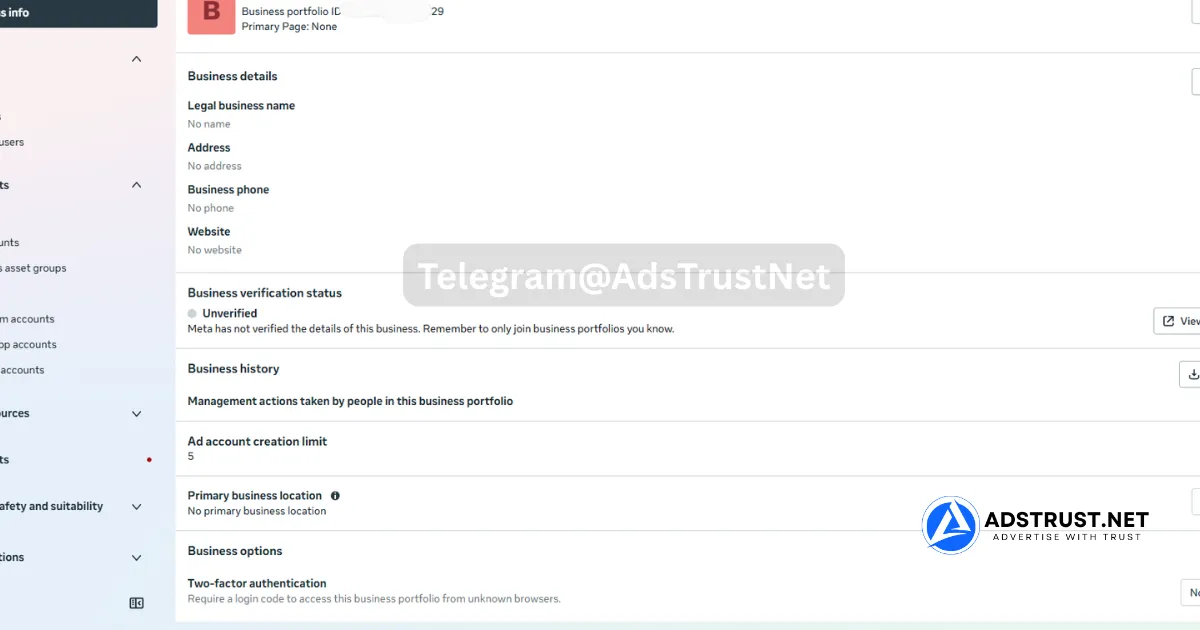
Once testing shows a winning offer and spend needs to scale across multiple ad accounts, buyers typically move toward BM10 or higher, similar to the progression covered in when should you upgrade from BM5 to BM10.
Agencies running affiliate traffic for multiple clients or verticals at once often need enterprise-tier infrastructure, a case explained further in what makes BM2500 an enterprise-level Business Manager.
A verified Business Manager tends to be the more resilient starting point for affiliate traffic specifically, since offer-based campaigns draw more automated review than standard retail ads.
AdsTrust’s verified Business Manager is built for exactly this kind of higher-scrutiny use case, arriving tested and working at delivery under AdsTrust’s stated warranty terms.
How Should Affiliate Buyers Think About Ad Account Count and Spend Limits?
Affiliate buyers rotating multiple offers benefit from having several ad accounts inside one Business Manager rather than one account carrying every campaign.
This isolates a single flagged offer from taking down the whole BM, a concept explored in depth in Facebook Business Manager spending limits explained.
Spend limits themselves scale with account trust and payment history, something Meta evaluates continuously per its Meta Business Help Center guidance on ad account standing.
AdsTrust’s catalog includes profile-based ad account bundles at different spend tiers, from entry-level $50 limit accounts to no-limit configurations, useful for testing versus scaling phases.
The distinction between a testing setup and a scaling setup matters more for affiliate offers than for most other verticals, since a losing test can burn an account fast.
For more on that split, see the real difference between testing accounts and scaling accounts.
How Do Regional and Compliance Factors Affect Affiliate BM Setups?
Affiliate offers frequently target specific geos, and running US-facing sweepstakes traffic from a profile that never touches the US raises review flags faster.
Media buyers running geo-specific affiliate campaigns often pair their BM with regional profile accounts matching the target market, rather than relying on one generic profile for every country.
AdsTrust maintains region-specific profile catalogs, including USA, EU, and emerging affiliate-heavy markets like India and Brazil.
The broader logic behind matching profile geography to offer geography is covered in buying Facebook profile accounts by country.
Compliance also means respecting Meta’s advertising standards on prohibited content categories common in affiliate verticals: unsubstantiated health claims, deceptive pricing, or misleading before/after imagery.
Budget Allocation: What Does a Bootstrapped Affiliate Media Buyer Actually Spend?
Full-service affiliate agencies commonly quote retainers in a wide range plus a performance fee on top, which puts them out of reach for many solo or small-team affiliate buyers.
A bootstrapped media buyer instead usually allocates budget across three buckets: creative testing spend, ad account infrastructure, and tracking software subscriptions.
- Start with a lean BM tier and a small ad account bundle to test 2-3 offers.
- Reserve infrastructure budget separately from testing budget, since a burned account should not stop testing.
- Scale BM tier and account count only after a repeatable winning offer is confirmed.
- Add regional profiles once expansion into new geos is planned, not before.
This sequencing avoids the common mistake of overbuying enterprise-tier infrastructure before there is a proven offer to justify it.
How Do Fanpages Fit Into an Affiliate Media Buying Stack?
A Fanpage acts as the identity behind every ad, and affiliate campaigns running from a brand-new, unverified page tend to face more friction than those backed by an aged or verified page.
AdsTrust offers both new Fanpages for fresh brand launches and aged Fanpages for buyers who want more established page history from day one.
How page age and history interact with ad account stability is explained further in how Facebook Fanpages affect ad account stability.
Building affiliate infrastructure from scratch on every failed BM wastes weeks that should go toward testing offers. AdsTrust’s verified Business Manager gives affiliate media buyers a tested, working starting point instead, no guesswork, no spam accounts.
FAQs
What is the difference between affiliate management software and a full-service affiliate agency?
Affiliate management software like Impact, PartnerStack, or Refersion tracks clicks, attributes conversions, and automates payouts.
A full-service agency handles recruitment, commission structuring, and compliance on top of whatever software stack is chosen, but neither layer manages your ad account infrastructure.
How much does it cost to hire an affiliate management agency?
Full-service affiliate agencies commonly charge monthly retainers ranging from low thousands to well into five figures, plus a performance fee typically between 5 and 15 percent of tracked revenue.
Costs scale with program complexity, publisher count, and reporting needs.
What should I look for when choosing an affiliate management platform?
Look for reliable attribution accuracy, real-time reporting, fraud detection tools, flexible commission structures, and integration support with your ad platforms and pixels.
Network reach (CJ, AWIN, ShareASale, Rakuten) also matters if you need publisher discovery, not just tracking.
Can I manage affiliate programs without hiring an agency?
Yes, many bootstrapped programs run in-house using platforms like PartnerStack or Tapfiliate for tracking, handling recruitment and commission decisions internally.
The bigger operational bottleneck for paid-traffic affiliates is usually stable ad account infrastructure, not program management itself.
What are the best affiliate networks for e-commerce, SaaS, or a specific vertical?
CJ Affiliate and Rakuten Marketing are commonly used for retail and e-commerce programs, while PartnerStack is popular among SaaS companies for partner and referral programs.
AWIN and ShareASale serve a broad mix of verticals with large publisher networks.
How do you prevent affiliate fraud and maintain brand safety?
Fraud prevention typically combines platform-level detection tools, manual publisher vetting, geo and IP monitoring, and clear program terms that define prohibited traffic sources.
On the ad side, keeping campaigns compliant with Meta’s advertising standards reduces the chance of account-level enforcement tied to reported creative.
What metrics matter most for measuring affiliate program success?
EPC (earnings per click), CPA (cost per action), conversion rate, and incremental revenue are the core metrics most programs track. Media buyers running paid social on top of affiliate offers also need to watch ad account spend stability, since a restricted account skews every downstream metric.
How do affiliate platforms integrate with ad accounts and tracking pixels?
Most affiliate platforms support pixel-based or server-to-server (S2S) tracking that fires conversion events back to the ad platform, similar to how a Meta pixel reports standard e-commerce conversions.
Pixel and Business Manager health both affect how reliably this data reaches your ad account, which is covered in how Facebook Business Manager controls ad accounts.
What is the typical ROI from affiliate program management?
ROI varies widely by vertical and program maturity, since affiliate marketing is performance-based by design, costs scale roughly with results.
The bigger driver of realized ROI for paid-traffic affiliates is often ad account uptime and spend limit headroom, not the tracking platform chosen.
How do I recruit and onboard high-quality affiliates?
Recruitment usually involves outreach through affiliate networks, direct sourcing, and competitive commission offers, followed by an onboarding process covering tracking setup and compliance terms.
Programs that vet affiliates for traffic quality upfront tend to see fewer fraud and brand-safety issues later.
Written by Victor Kwang, blog lead at AdsTrust Global Pte. Ltd. (Singapore). AdsTrust’s specialists have worked in Meta advertising since 2017, serving 2,000+ customers across verified Business Managers, ad accounts, Fanpages, and regional profiles. Read more from Victor on the author page.